 Gentle Care
Quick View & Video
Discover how rice flour and potato enzymes work together to provide dual-action exfoliation for smoother, brighter skin without harsh synthetic chemicals.
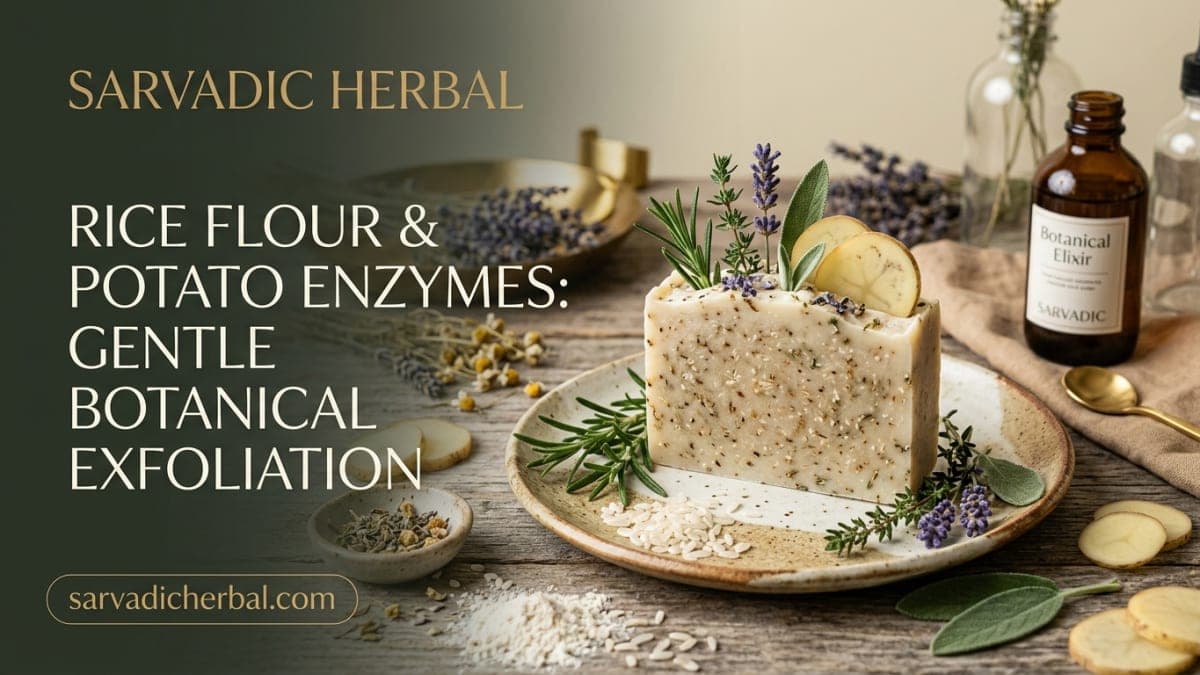
Exfoliation is the process of removing dead skin cells from the surface of the epidermis. While the skin naturally sheds these cells every 28 to 30 days, factors like age, environmental pollutants, and sebum buildup can slow this process, leading to a dull complexion and clogged pores.
In herbal skincare, we look toward ingredients that offer a dual-action approach: physical and enzymatic exfoliation. Rice flour and potato extract are two such ingredients that work synergistically to refine skin texture without the irritation often associated with synthetic chemical peels.
Rice flour (Oryza sativa) has been used for centuries in Asian skincare traditions. Unlike harsh plastic microbeads or jagged nut shells, finely milled rice flour provides a gentle mechanical action.
Potato extract (Solanum tuberosum) operates differently. It contains an enzyme called catecholase, which is traditionally believed to help brighten the skin and reduce the appearance of dark spots.
Enzymatic exfoliation works by breaking down the 'glue' (keratin proteins) that holds dead skin cells together. Because enzymes only target dead protein, they are often much gentler on the living tissue underneath compared to strong acids.
| Feature | Physical (Rice Flour) | Enzymatic (Potato Extract) |
|---|---|---|
| Mechanism | Manual scrubbing of surface cells | Dissolving protein bonds of dead cells |
| Target | Surface debris and rough patches | Pores and uneven skin tone |
| Intensity | Dependent on pressure applied | Self-limiting and gentle |
| Key Benefit | Immediate smoothness | Gradual brightening and blemish care |
To benefit from these ingredients without over-stripping your skin, consistency is more important than intensity.
At Sarvadic Herbal, we harness these principles in our Rice & Potato Soap. By combining finely milled rice flour with fresh potato extract in a moisturizing glycerin base, we provide a product that purifies the skin while maintaining the lipid barrier. This formulation is designed to clear blemishes and provide a luminous finish through gentle, daily exfoliation rather than harsh chemical intervention.
While traditional use and preliminary studies on ferulic acid (found in rice) and catecholase (found in potatoes) show promise for skin health, they are not medical treatments. Natural ingredients work slowly and results vary based on skin type. They should not be used as a replacement for clinical treatments for severe acne or chronic dermatological conditions.
Get clear, glowing, and spot-free skin naturally! Sarvadic Herbal Rice & Potato Soap combines the traditional power of Rice extract and Raw Potato juice to deeply cleanse and nourish your skin.
The botanical and dermatological claims in this article are cross-referenced with peer-reviewed literature and classical Ayurvedic texts:
Formulation & Botanical Research
Our research desk collaborates with classical Ayurvedic literature and modern cosmetic dermatology sources to present accurate, barrier-first botanical education.
Handcrafted with pure botanical powders and retained natural glycerin.
Explore neem's traditional Ayurvedic skincare uses, active phytochemicals, what dermatological evidence supports, and safe-use precautions for sensitive skin.
Discover how Sandalwood and Multani Mitti gently clarify sun-exposed skin, soothe heat redness, and purify pores without harsh chemical bleaches.
Connect directly with our Ayurvedic wellness team for personalized skin recommendations, instant updates, and member benefits.
Get 1-on-1 personalized soap recommendations tailored to your specific skin type (dry, acne-prone, oily, or sensitive).
Enjoy priority access to limited seasonal cold-processed soap batches, festival gift boxes, and special promo rewards.
Discover traditional Indian skincare rituals, cold-cure soap benefits, and botanical ingredient breakdown articles.